How to Find Online Therapy: A Professional Patient Guide
Learn how to find online therapy safely. Compare licensed therapists, verify credentials, and check insurance for professional mental health support from home.

Written for real people
Finding a therapist can feel like work when you are already feeling stressed, anxious, low, or overwhelmed. You may be comparing profiles, checking prices, wondering whether a therapist accepts your insurance, and trying to understand which type of support fits your needs.
Online therapy can make that process easier. You can search from home, compare providers, and schedule care without adding a long commute to your day. Still, choosing the right therapist takes more than clicking the first profile you see.
This guide explains how to find professional therapy online : clearly and safely.
It covers what to look for, how to check credentials, how to compare cost and insurance, how to protect your privacy, and what to do if you need urgent help.
Patient search made simple : Find verified mental health providers. Free, no obligation. Takes 60 seconds.
Online Therapy, Explained
Online therapy is professional mental health care delivered through a secure digital service. Sessions may happen by video, phone, or another approved communication method. Some providers also offer secure messages between appointments.
A therapist may help you work through:
- Anxiety or ongoing worry
- Depression or low mood
- Stress and burnout
- Grief and loss
- Relationship concerns
- Family challenges
- Trauma-related concerns
- Work or school pressure
- Changes in sleep, motivation, or daily routines
- Substance use concerns
- Life transitions and difficult decisions
Therapy is not only for people in a crisis. Many people start therapy while navigating a major change, managing stress, improving relationships, or learning healthier ways to respond to difficult emotions.
Online therapy may be a good fit if you want:
- More flexible scheduling
- Evening or weekend appointments
- Care from home
- A provider who understands your background or language
- Support without a long commute
- Access to a specialist who is not located nearby
- The option to compare several professionals before choosing
Online therapy is not right for every situation. Some people prefer meeting in person. Others may need a higher level of support than online sessions can provide. A licensed professional can help you decide what type of care is appropriate.
Choosing an Online Therapist, Explained
The best therapist for you is not always the therapist with the highest rating or the earliest appointment. Good care depends on professional qualifications, experience, communication style, availability, cost, and personal fit.
Start by identifying what matters most to you.
1. Clarify what you want help with
You do not need to diagnose yourself before contacting a therapist. You only need to describe what you are experiencing in everyday language.
You might say:
- “I have been feeling anxious most days.”
- “I am struggling after a major loss.”
- “My relationship feels tense, and I want help communicating.”
- “I cannot seem to switch off after work.”
- “I want support managing changes in my mood.”
- “I am having trouble sleeping because I feel overwhelmed.”
Writing down two or three concerns can make searching easier. It can also help you explain your needs during your first appointment.
If you are looking for medication evaluation as well as therapy, you may need a psychiatrist or another qualified medical professional who provides medication management. A therapist generally focuses on counseling and emotional support. Some practices offer both services, while others focus on therapy only.
2. Check the therapist’s license
A professional therapist should hold an active license in the state where you are receiving care. Common provider types include psychologists, licensed clinical social workers, licensed professional counselors, and marriage and family therapists.
When reviewing a profile, look for:
- Professional title
- License type
- State or states where the provider practices
- Areas of experience
- Therapy formats offered
- Whether the provider is accepting new patients
- Whether telehealth is available
You can also verify licensing through your state’s professional licensing board. A directory can make searching easier, but you should still review the provider’s information and ask questions before beginning care.
At Medical Online Directory, verified profiles and real patient reviews help you compare providers with greater confidence. Trust signals such as a 4.8★ average rating, verified profiles, and patient feedback can help you narrow your choices : but they should support your decision, not replace it.
3. Look for experience that matches your needs
Therapists often work with a range of concerns. Some focus on specific areas, such as anxiety, grief, trauma, couples counseling, children’s mental health, or substance use.
Read the profile carefully. Look for plain explanations of:
- Who the therapist typically supports
- What concerns they commonly address
- Whether they work with adults, children, couples, or families
- Which languages they speak
- Whether they offer video, phone, or in-person visits
- How they describe their approach
You do not need to understand every therapy method before choosing a provider. If a profile uses unfamiliar terms, ask the therapist to explain how that approach may support your goals.
A good therapist should welcome questions. You should not feel pressured to commit before you understand the basics of the service.
Comparing Online Therapy Options, Explained
Online therapy may be offered through a therapist’s private practice, a group practice, a healthcare system, or a larger digital platform. Each option can work well. The important step is comparing what each service actually includes.
Video, phone, messaging, or a mix?
Live video sessions are the closest online equivalent to an office visit. They allow you and your therapist to speak in real time and see each other during the appointment.
Phone sessions may be useful if you have limited internet access or feel more comfortable without video.
Messaging can offer flexibility, but it may not provide the same level of support as a live appointment. Ask how quickly the therapist responds, whether messaging is included, and whether it is intended for brief updates rather than urgent support.
Before choosing a format, consider:
- Which option helps you speak openly?
- Do you have a private place for sessions?
- Is your internet connection reliable?
- Do you need evening or weekend appointments?
- Will you use a phone, tablet, or computer?
- What happens if the connection drops?
You can also look for providers who clearly show telehealth availability. Browse providers offering telehealth to begin comparing options.
Insurance and cost
Prices vary by therapist, location, appointment length, and insurance plan. Before booking, ask:
- Does the therapist accept my insurance?
- Is the therapist in network?
- What will my copay or deductible be?
- Is a subscription required?
- What is the self-pay price?
- Are sliding-scale fees available?
- What is the cancellation policy?
- Are missed appointments charged?
Do not assume that a therapist accepts your insurance just because the platform accepts insurance. Confirm the provider and your specific plan.
If cost is a concern, consider community mental health centers, employer assistance programs, university counseling services, federally qualified health centers, and providers who offer reduced fees. SAMHSA’s National Helpline can also connect people with free, confidential treatment information and referrals in the United States.
Availability and continuity
A convenient first appointment is helpful. Ongoing availability matters more.
Try to find out:
- How often appointments are available
- Whether the therapist is accepting new patients
- Whether you can keep the same appointment time
- What happens when the therapist is unavailable
- Whether another provider covers urgent messages
- How easy it is to switch therapists if needed
Medical Online Directory lets patients search by location, specialty, insurance, language, telehealth availability, and accepting-new-patients status. You can also compare providers before deciding.
Privacy and Safety in Online Therapy, Explained
Privacy matters in every healthcare visit. It matters even more when you are discussing personal thoughts, relationships, trauma, or emotional distress from a digital device.
Before starting, review the platform’s privacy policy. Look for clear information about:
- How your information is collected
- How it is stored
- Who can access it
- Whether sessions are recorded
- How messages are protected
- How you can request or delete account information
- What happens if you stop using the service
A trustworthy service should explain its privacy and security practices in clear language. Be cautious if the information is difficult to find or filled with vague promises.
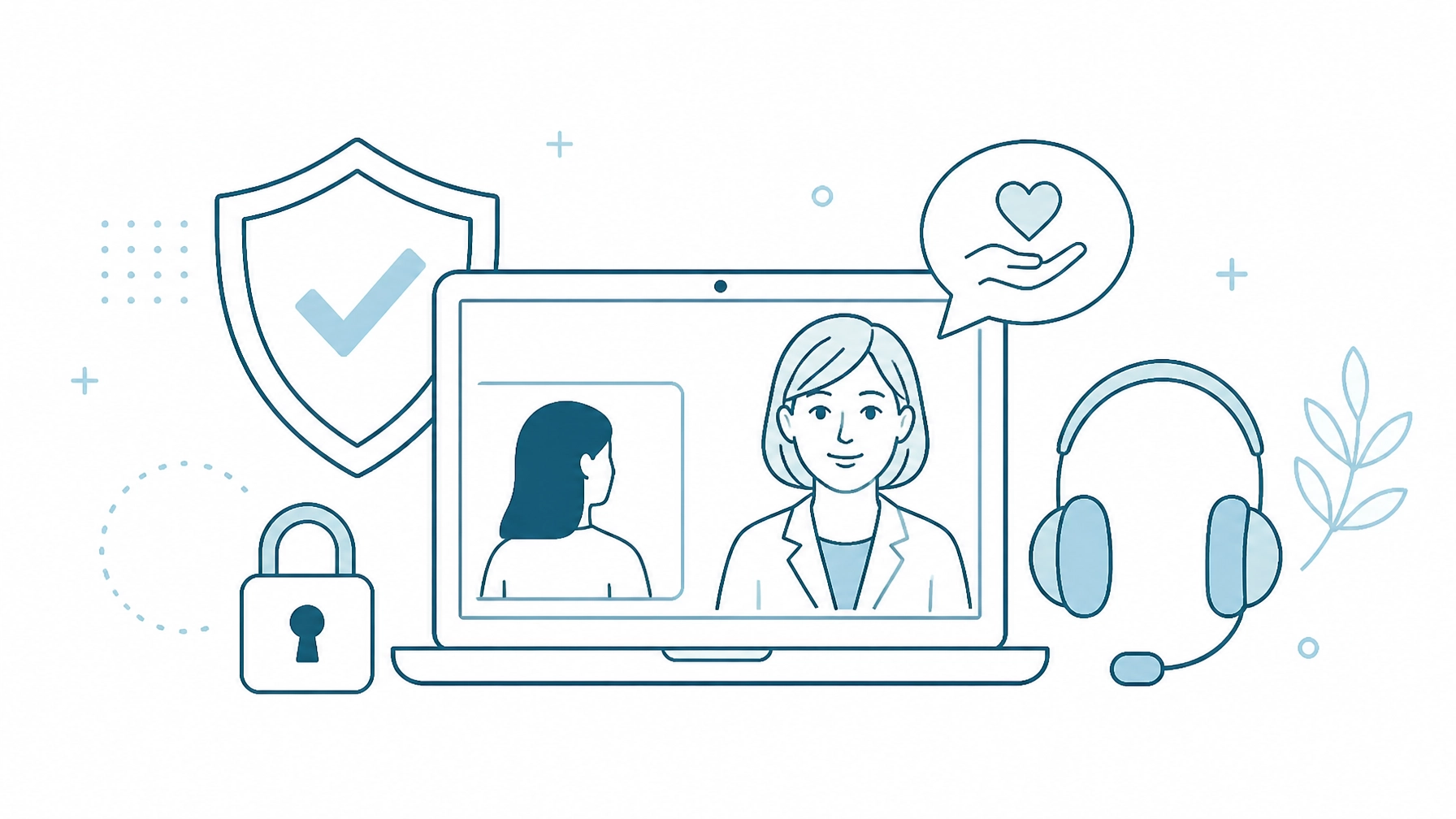
You can also protect your own privacy by:
- Choosing a quiet, private room
- Using headphones
- Locking your phone or computer
- Avoiding public Wi-Fi when possible
- Testing your camera and microphone before the visit
- Keeping your device software updated
- Asking household members not to interrupt
- Using a private email address if appropriate
If you live with other people, privacy may require planning. You might sit in a parked car, use a bedroom, or schedule a session while others are away. Tell your therapist if you cannot speak privately. They can help you think through options.
Medical Online Directory also provides patient-focused information through its FAQ page, including guidance about privacy, reviews, telehealth, and finding care.
Preparing for Your First Online Therapy Session
Your first session does not need to be perfect. You do not need a complete explanation of your life. You only need to begin honestly.
Before the appointment, consider writing down:
- Why you decided to seek support
- What has been difficult recently
- What you want to change
- Questions about the therapist’s approach
- Questions about privacy and communication
- Any scheduling or cost concerns
During the appointment, notice how the therapist communicates. Do they listen? Do they explain things clearly? Do you feel respected? Are they asking useful questions without rushing you?
You may not feel completely comfortable during the first session. That is normal. Building trust can take time.
After the session, ask yourself:
- Did I feel heard?
- Did the therapist understand what I wanted help with?
- Could I speak honestly with this person?
- Did the session have a clear purpose?
- Do I understand the next step?
- Can I afford to continue?
- Is the format working for me?
A good fit does not mean every session feels easy. It means you can work together respectfully and safely.

When to Change Therapists, Explained
Choosing a therapist is not a permanent decision. You can change providers if the relationship does not feel helpful or appropriate.
Consider looking for another therapist if:
- You consistently feel dismissed
- The therapist does not respect your goals or boundaries
- You cannot communicate about scheduling or payment
- The therapist lacks experience with your concerns
- You feel pressured to continue
- The sessions do not feel private or secure
- You have raised concerns and nothing changes
Switching does not mean therapy failed. It means you are continuing to search for support that fits.
You can say, “I do not think this is the right fit for me, so I am going to look for another provider.” You do not need to provide a long explanation.
Online Therapy Is Not Emergency Care
Online therapy platforms and routine therapist appointments are not emergency services.
If you may hurt yourself or someone else, cannot stay safe, or are facing immediate danger, call 911 or go to the nearest emergency department.
In the United States, call or text 988 to reach the 988 Suicide & Crisis Lifeline. Support is available 24/7, and conversations are free and confidential. You can also use 988 to support a friend or loved one.
If you are outside the United States, contact your local emergency number or crisis service.
Do not wait for a scheduled therapy appointment during an emergency. Reach for immediate help first.
Finding Professional Therapy Online: A Simple Checklist
Use this checklist when comparing providers:
- I know what I want support with.
- The provider has an active professional license.
- The provider works with my age group and concerns.
- The provider offers my preferred format.
- I checked insurance or self-pay costs.
- I understand the cancellation policy.
- The platform explains privacy and security.
- I have a private place for sessions.
- I know what to do if technology fails.
- I know where to get urgent help.
- I understand how to switch providers if needed.
You can begin by searching Medical Online Directory, filtering by specialty and location, and comparing verified profiles with real patient reviews. Search tools are designed to reduce the time spent navigating care : helping you move from uncertainty to a practical next step.
The Bottom Line
Finding professional therapy online can be simple when you break the process into small actions.
Start by describing what you need. Check the provider’s license and experience. Compare video, phone, and messaging options. Confirm insurance and cost. Review privacy information. Prepare a few questions. Then give yourself permission to change providers if the fit is not right.
You deserve support that feels respectful, accessible, and clear.
Ready to begin? Find a mental health provider. Free, no obligation. Takes 60 seconds.
Founding Provider : Claim your free 90-day Verified trial
Mental health professionals have limited founding slots available. Claim your verified profile now, strengthen your online trust signals, and connect with patients searching for care. Free, no obligation.
Healthcare bloggers and wellness partners can earn a 20% recurring commission through the Medical Online Directory affiliate program. Unsubscribe anytime.
Frequently Asked Questions
Is online therapy effective?
Online therapy can help many people, especially when the patient and therapist build a strong working relationship. Effectiveness depends on your needs, the provider’s qualifications, the quality of communication, and whether the format suits you. Talk with a licensed professional if you are unsure whether online care is appropriate.
How do I know if an online therapist is qualified?
Check the therapist’s professional title, active license, areas of experience, and state of practice. You can also verify the license through your state licensing board. Verified profiles and real patient reviews provide useful trust signals, but they should be considered alongside credentials and personal fit.
Does health insurance cover online therapy?
Many insurance plans cover some online mental health services, but coverage varies. Confirm whether the therapist is in network, ask about your copay and deductible, and check whether prior authorization is required. Always verify benefits with your insurer and the provider before your first appointment.
What should I do if I do not like my therapist?
You can discuss your concerns with the therapist or request a different provider. A strong therapeutic relationship takes trust and communication. If the match does not feel right after giving it reasonable consideration, switching therapists is a normal part of finding suitable care.
Can I use online therapy during a mental health emergency?
Routine online therapy is not a replacement for emergency care. If you are in immediate danger or cannot stay safe, call 911 or go to the nearest emergency department. In the United States, call or text 988 for the Suicide & Crisis Lifeline.
How quickly can I find an online mental health provider?
Availability depends on your location, insurance, specialty, and appointment preferences. Using filters for telehealth and providers accepting new patients can reduce your search time. Medical Online Directory helps you compare available options quickly ( it takes 60 seconds to begin.)
Found this article helpful?