ER vs Urgent Care vs Primary Care: Where Should You Go?
Learn when to choose ER vs urgent care or primary care. Our 2026 guide helps you save money and get faster treatment by matching symptoms to the right facility.

Category: Urgent Care
Deciding where to seek medical attention during a health setback is a high-stakes choice. Choosing the wrong facility often leads to hours of unnecessary waiting : and potentially thousands of dollars in medical bills. Navigating the modern healthcare landscape requires a clear understanding of the three primary tiers of care: Primary Care, Urgent Care, and the Emergency Room (ER).
This guide is written for real people who need to make fast, informed decisions. Whether you are searching for an urgent care near me for a sudden fever or trying to decide if a sports injury requires an ER visit, the following breakdown simplifies the process into manageable steps.
A lot of health problems feel urgent in the moment. A child wakes up with a high fever. You twist your ankle during a weekend game. A parent develops sudden chest pain after dinner. These situations do not leave much room for guesswork. Knowing where to go helps you move faster, avoid unnecessary stress, and get care from the team best equipped to help.
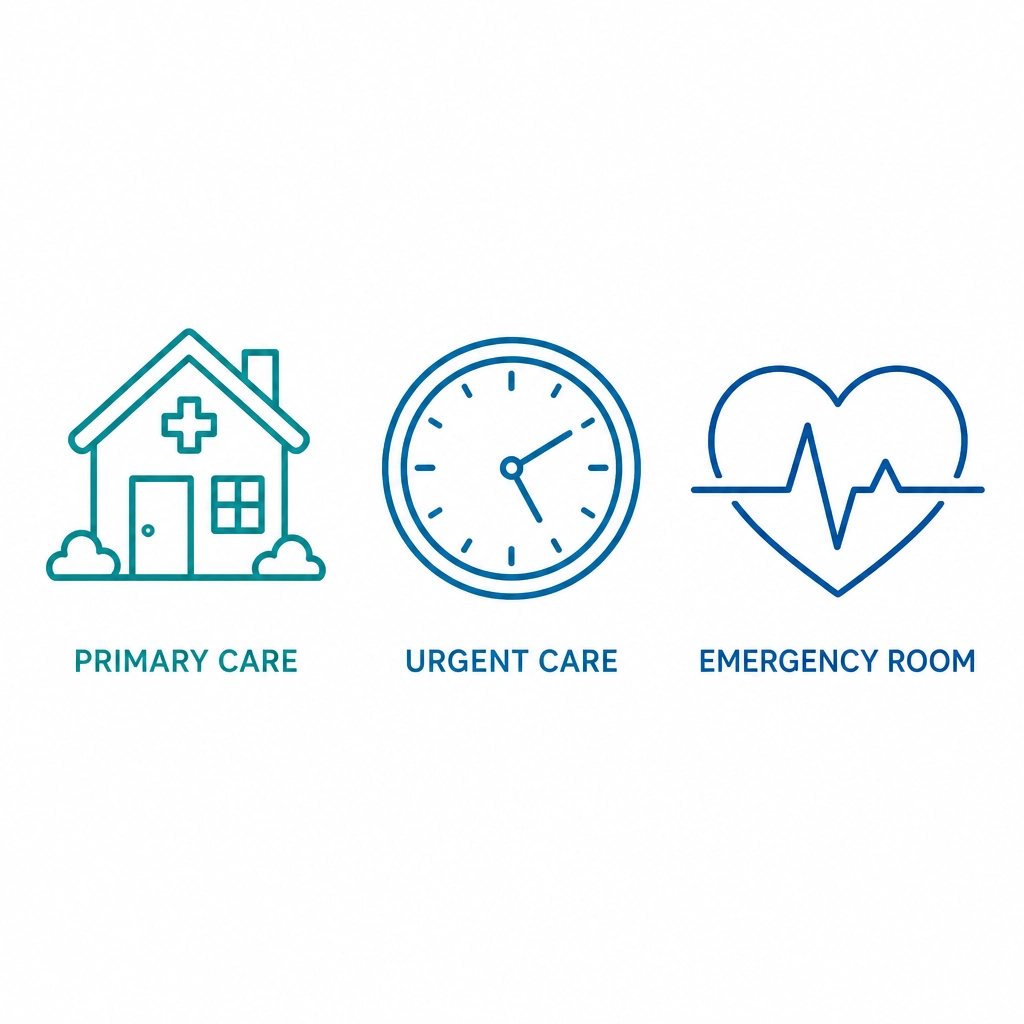
The key is matching the problem to the setting. Primary care is built for prevention, follow-up, and steady care over time. Urgent care is built for same-day issues that need attention soon but are not immediately dangerous. The ER is built for severe symptoms, major injuries, and life-threatening emergencies. Once you understand that difference, the decision becomes much clearer.
Choosing the right care, explained
Choosing between these three options is not just about the severity of your symptoms : it is about the resources each facility provides.
- Primary Care is your home base for long-term health.
- Urgent Care serves as the bridge for non-emergencies that cannot wait until tomorrow.
- The Emergency Room is a life-saving engine designed for critical, time-sensitive interventions.
Misusing these services causes friction in the healthcare system. Using an ER for a minor infection drains resources meant for trauma patients, while waiting for a primary care appointment for a deep laceration could lead to permanent damage. Understanding the "ER vs urgent care" dynamic is the first step toward better health outcomes.
A simple rule can help. Ask yourself three questions:
- Is this life-threatening right now? If yes, go to the ER or call 911.
- Does this need care today, but it is not severe or dangerous? If yes, urgent care may be the best fit.
- Can this wait for a scheduled visit, follow-up, or ongoing care plan? If yes, primary care is usually the right place.
It also helps to think about what each setting can do. A primary care office knows your medical history, medications, and long-term needs. An urgent care center can often handle same-day testing, simple imaging, stitches, and quick treatment. An ER can manage heart attacks, strokes, major trauma, severe breathing trouble, and emergencies that may require surgery, hospital admission, or advanced monitoring.
That difference matters because the right setting often leads to better care and a smoother visit. It can also reduce unnecessary costs. A sore throat treated at urgent care may cost a fraction of the same complaint evaluated in an ER. On the other hand, trying to manage stroke symptoms at urgent care wastes time that could change the outcome. Speed matters, but choosing the right speed matters even more.
Primary care, explained
Maintaining a relationship with a primary care provider is the most effective way to manage your health over time. These professionals : including family doctors, internists, and pediatricians : focus on your medical history, preventative screenings, and chronic disease management.
Staying healthy with consistency
Primary care is the ideal setting for routine checkups, vaccinations, and non-urgent health concerns. Because your doctor has access to your full medical records, they can identify patterns in your health that a walk-in clinic might miss.
Primary care is where prevention happens. It is also where small problems often get handled before they become large ones. If you have rising blood pressure, ongoing fatigue, recurring headaches, heartburn that keeps coming back, trouble sleeping, or mild anxiety that is affecting daily life, your primary care provider is often the best starting point. They can evaluate the full picture instead of only treating the symptom in front of them.
When to visit primary care:
- Annual wellness exams and physicals.
- Managing ongoing conditions like high blood pressure or diabetes.
- Standard lab work and blood tests.
- Prescription refills and medication adjustments.
- Mental health screenings and referrals to specialists like cardiologists.
- Follow-up after an urgent care or ER visit.
- Mild but persistent symptoms such as ongoing cough, reflux, joint pain, irregular sleep, or low energy.
- Preventive screenings based on age, family history, and risk factors.
What primary care usually treats
Primary care is a strong fit for issues that are important but not dangerous. Examples include:
- Seasonal allergies that are not causing severe breathing trouble.
- Mild colds, sinus pressure, and lingering congestion.
- Back pain that has been building over time without sudden weakness or loss of bladder control.
- Mild skin concerns, including acne, eczema flare-ups, or suspicious moles that need review.
- Digestive concerns like constipation, mild stomach discomfort, or reflux.
- Women’s routine health needs, contraception questions, and screening referrals.
- School, sports, and work physicals.
What to expect at a primary care visit
Most primary care visits are scheduled in advance. You may fill out health forms, review medications, and talk through symptoms in detail. Your provider may check blood pressure, temperature, weight, oxygen level, and other basic measurements. They may order lab work, recommend imaging at another location, adjust medications, or refer you to a specialist if needed.
This setting is especially useful when the issue is not just one symptom. For example, if you have fatigue, weight changes, poor sleep, and mood changes, a primary care provider can connect those dots. An urgent care center may help with one immediate symptom, but primary care is better for ongoing answers and a long-term plan.
Why primary care often saves money
Primary care is usually the lowest-cost option for non-urgent needs. It also helps prevent expensive complications later. A routine blood pressure check and medication adjustment is far less costly than a hospital visit caused by untreated hypertension. The same is true for preventive screenings, vaccine updates, and early referrals.
Finding a trusted provider on Medical Online Directory allows you to compare profiles and read verified reviews before booking. Establishing this connection now ensures you have a professional to call when a minor health question arises later.
Urgent care, explained
Navigating a sudden illness on a Saturday afternoon often means looking for a walk in clinic near me. Urgent care centers are designed to treat conditions that require immediate attention but are not life-threatening. They offer extended hours and weekend availability, making them a convenient alternative when your primary doctor’s office is closed.
Treating non-emergencies with speed
Urgent care facilities are equipped to handle a wide range of minor injuries and illnesses. They often have basic X-ray machines and on-site labs, allowing them to diagnose sprains or strep throat quickly.
When to choose urgent care:
- Sore throats, earaches, and sinus infections.
- Minor cuts that might need a few stitches but aren't heavily bleeding.
- Low-grade fevers and flu-like symptoms.
- Sprains, strains, and minor fractures (fingers or toes).
- Urinary tract infections (UTIs) and rashes.
- Mild asthma flare-ups without severe breathing distress.
- Nausea, vomiting, or diarrhea that is uncomfortable but not causing severe dehydration.
- Minor eye issues like pink eye, irritation, or a scratched cornea.
- Mild burns, bug bites, and simple allergic reactions without facial swelling or breathing trouble.
The primary benefit here is efficiency. Most visits take less than an hour, and the cost is significantly lower than a trip to the hospital.
What urgent care usually handles well
Urgent care is the middle ground. It works best when waiting several days is not ideal, but the problem is not dangerous enough for the ER. Good examples include a child with an ear infection after school, a kitchen cut that may need stitches, painful urination that suggests a UTI, or a swollen ankle after stepping off a curb.
This is also where many people go for fast testing. Depending on the location, urgent care may offer rapid strep tests, flu tests, COVID-19 testing, urine tests, pregnancy tests, and basic X-rays. That can make urgent care especially useful when you want an answer and treatment plan the same day.
What to expect at urgent care
Most urgent care centers take walk-ins, though some also let you reserve a time online. You will usually check in, describe your symptoms, and wait based on how busy the clinic is. Your visit may include a physical exam, simple lab work, wound care, splinting, or imaging.
You may leave with:
- A prescription for antibiotics, inhalers, or symptom relief.
- Instructions for home care and warning signs to watch for.
- A recommendation to follow up with primary care.
- A referral to the ER if the team finds something more serious than expected.
That last point is important. Urgent care is not a downgrade from the ER. It is a different tool. If the provider sees signs of appendicitis, chest pain that may be cardiac, a major fracture, or severe dehydration, they will direct you to emergency care quickly.
When urgent care is not enough
Even if a clinic is nearby, urgent care should not be used for symptoms such as crushing chest pain, stroke signs, severe trouble breathing, heavy bleeding, major head trauma, or sudden confusion. In those cases, go straight to the ER or call 911. The time saved by skipping urgent care can matter.
Urgent care is best for problems that are urgent, uncomfortable, and time-sensitive : but stable.
Emergency room, explained
Choosing the Emergency Room is necessary when a condition poses an immediate threat to life or limb. ERs are open 24/7 and are staffed by specialists trained in trauma and critical care. They have access to advanced imaging : like CT scans and MRIs : and surgical suites that are not available at urgent care centers.
Responding to critical threats
In an emergency, every second counts. If you are experiencing symptoms of a stroke or heart attack, you should call 911 or head to the nearest ER immediately. Do not attempt to drive yourself if you are experiencing severe distress.
When to go to the ER:
- Chest pain or pressure (potential heart attack).
- Sudden weakness, numbness, or difficulty speaking (potential stroke).
- Severe difficulty breathing or shortness of breath.
- Uncontrolled bleeding or deep, large wounds.
- Head injuries involving loss of consciousness or confusion.
- Sudden, severe pain, especially in the abdomen.
- High fevers that do not respond to medication or are accompanied by a stiff neck.
- Fainting with ongoing symptoms, blue lips, or signs of low oxygen.
- Serious burns, major fractures, or injuries from car accidents and falls.
- Severe allergic reactions with swelling of the mouth, throat, or tongue.
What the ER is built to do
The ER is not simply a walk-in clinic inside a hospital. It is designed for rapid stabilization and high-risk evaluation. Emergency teams can monitor heart rhythm, provide oxygen, give IV fluids and emergency medications, stop severe bleeding, perform advanced scans, and coordinate with surgeons, neurologists, and other hospital specialists.
If someone has signs of sepsis, internal bleeding, appendicitis, a blood clot, meningitis, severe dehydration, or a dangerous drop in blood pressure, the ER has the staff and equipment to respond immediately. That is the main difference. It is not just about speed. It is about the level of care available in the room.
What to expect at the ER
ERs use triage. That means patients are seen based on medical urgency, not first-come, first-served order. Someone with a broken finger may wait longer than someone who arrived later with chest pain or stroke symptoms. That can feel frustrating, but it is how emergency departments protect the sickest patients first.
A typical ER visit may include:
- Triage by a nurse.
- Ongoing vital sign checks.
- Blood tests, scans, heart monitoring, or IV treatment.
- Pain control and emergency procedures.
- A decision to discharge, observe, or admit you to the hospital.
Because the ER handles unpredictable emergencies, wait times vary widely. If your condition is stable, you may wait longer than expected. If your condition is severe, you may be moved back immediately.
When to call 911 instead of driving
Some situations are safer with emergency transport. Call 911 if the person is unconscious, having severe breathing trouble, showing stroke symptoms, having a seizure that does not stop, experiencing major trauma, or unable to move safely. Paramedics can begin care on the way, and that early treatment can be critical.
2026 Comparison: Costs and wait times
The financial difference between these settings is substantial. In 2026, healthcare costs continue to vary based on location and insurance, but the general hierarchy remains the same. The "primary care vs urgent care" cost gap is manageable, but the jump to the ER is steep.
| Care Setting | Typical Visit Cost (No Insurance) | Average On-Site Wait Time |
|---|---|---|
| Primary Care | $75 – $200 | < 30 Minutes (with appointment) |
| Urgent Care | $100 – $250 | 15 – 60 Minutes |
| Emergency Room | $1,500 – $3,000+ | 2 – 4+ Hours |
Data reflects 2026 US averages for non-catastrophic visits.
The bill can change based on tests, imaging, medications, and whether your visit leads to additional treatment. A basic primary care visit for a routine concern may stay near the low end of the range. An urgent care visit with an X-ray, lab test, or wound repair may land higher. In the ER, costs can rise quickly if you need CT imaging, IV medication, specialist evaluation, or observation.
Looking beyond the base visit price
It helps to think in layers:
- Primary Care: Office visit fee, possible lab work, and follow-up.
- Urgent Care: Visit fee plus testing, splints, stitches, or simple imaging.
- ER: Facility fee, physician fee, imaging, lab work, medications, and possible hospital admission.
For insured patients, out-of-pocket costs also depend on copays, deductibles, coinsurance, and whether the facility is in-network. Some plans have a modest primary care copay, a slightly higher urgent care copay, and a much larger ER copay. Others apply the ER visit to your deductible, which can leave you with a bigger bill before coverage fully kicks in.
Example cost scenarios
To make this practical, here are common examples:
- A sore throat with a strep test may be relatively low-cost in urgent care compared with the ER.
- A routine blood pressure medication refill is usually best and cheapest through primary care.
- A twisted ankle may be manageable in urgent care if a simple X-ray is all you need.
- Severe abdominal pain that turns out to be appendicitis belongs in the ER, even though it costs more, because the higher level of care is necessary.
Wait times also work differently
Primary care often has the shortest in-office wait if you already have an appointment, but the appointment itself may be days away. Urgent care is faster for same-day needs, though evenings, weekends, and flu season can increase wait time. The ER may be the longest wait for stable conditions because teams must prioritize the most critical patients first.
Using the Medical Online Directory facilities search can help you find nearby centers that accept your specific insurance plan, further reducing your out-of-pocket expenses.
Identifying your symptoms, explained
If you are still unsure where to go, use this quick-reference list to match your symptoms with the appropriate level of care.
Primary Care (Scheduled)
- Mild cough or congestion
- Standard physicals
- Vaccinations (Flu, COVID-19 boosters)
- Chronic pain management (Back pain, arthritis)
- Skin checks (Referrals to dermatologists)
- Mild headaches that keep returning
- Sleep concerns, stress, or low mood without immediate danger
- Follow-up for blood pressure, cholesterol, asthma, or thyroid care
Urgent Care (Walk-in)
- Fever without a rash
- Vomiting or persistent diarrhea
- Animal or insect bites
- Minor burns (sunburn or kitchen mishaps)
- Eye redness or irritation (Pink eye)
- Mild wheezing without severe breathing trouble
- Small cuts needing stitches
- Sprains, strains, and possible minor fractures
- Painful urination or bladder infection symptoms
Emergency Room (Immediate)
- Poisoning or drug overdose
- Seizures or convulsions
- Severe allergic reactions (swelling of lips/tongue)
- Compound fractures (bone protruding through skin)
- Suicidal thoughts or severe mental health crises
- Severe chest pain, crushing pressure, or sudden shortness of breath
- Signs of stroke such as facial droop, arm weakness, or speech changes
- Major head injury, severe confusion, or sudden loss of consciousness
A quick decision tip
If you are debating between urgent care and the ER, pay close attention to intensity. Mild to moderate symptoms that are stable often fit urgent care. Severe symptoms, rapidly worsening symptoms, or anything affecting breathing, consciousness, major bleeding, or possible heart or brain function belongs in the ER. If you are unsure and the situation feels dangerous, choose emergency care.

Finding the right provider, explained
Searching for where to go for medical care during a stressful moment is difficult. Medical Online Directory simplifies this process by providing a centralized platform to compare your options.
Connecting with verified care
Our directory lists over 37,000 verified providers across 12+ medical specialties. We focus on transparency, providing real patient reviews and clear indicators of which facilities are currently accepting new patients.
- Filter by Insurance: Ensure the clinic you visit is in-network to avoid surprise bills.
- Telehealth Indicators: Many primary care and urgent care needs can now be met through a video call. Look for the telehealth icon to save a trip to the office.
- Map View: Instantly see the closest urgent care near me or the nearest hospital ER.
- Symptom Matching: Use our advanced filters to find specialists for specific conditions, from oncologists to orthopedic surgeons.
Using the directory with less stress
In a stressful moment, speed and clarity matter. Instead of opening multiple tabs and guessing which office is open, you can compare provider types in one place. That makes it easier to answer practical questions fast:
- Is this clinic open now?
- Does this doctor accept my insurance?
- Is telehealth available?
- Is the office accepting new patients?
- How far away is the nearest urgent care or hospital?
That kind of visibility can be especially useful for families, caregivers, college students living away from home, and people who recently moved and need new providers quickly.
Saving time and money
The goal of Medical Online Directory is to reduce the friction in your healthcare journey. By helping you choose the right tier of care, we help you avoid the high costs and long waits associated with ER misuse.
Finding a provider takes 60 seconds. Our platform is free, with no obligation. You can browse listings, compare ratings, and connect with the right doctor without any commitment.
Staying prepared for the unexpected
The best time to decide where to go for medical care is before an emergency happens.
- Identify your primary care doctor: Ensure you have an established provider for routine needs.
- Locate your nearest urgent care: Know the hours and location of a walk-in clinic near your home or work.
- Know your ER: Identify the closest hospital and check if they are in your insurance network.
- Bookmark the directory: Keep Medical Online Directory handy on your smartphone for instant access to verified healthcare data.
Preparing before something goes wrong
A few simple steps can make a stressful situation much easier:
- Keep a current list of medications in your phone or wallet.
- Write down allergies, major health conditions, and past surgeries.
- Save insurance card photos on your phone.
- Know who to call for your child, parent, or partner if you are helping manage their care.
- Keep your primary care office number, nearest urgent care, and closest ER saved in your contacts.
If you have children, it also helps to know which urgent care centers see pediatric patients. If you manage a chronic condition such as asthma, diabetes, or heart disease, ask your primary care provider what symptoms should trigger urgent care versus the ER. That guidance can save time when symptoms flare.
What to bring when you go
If the situation allows, bring:
- Photo ID
- Insurance information
- Medication list
- Allergy list
- A summary of symptoms, including when they started
- Contact information for your regular doctor
For emergencies, do not delay care just to gather paperwork. Go first. Bring details only if it is safe and practical.
Emergency planning for families
Preparation is not only for major disasters. It is for everyday health surprises. Make a simple household plan:
- Decide who will drive and who will stay with children if an adult needs emergency care.
- Keep a basic first-aid kit at home and in the car.
- Teach family members how to call 911 and share your address clearly.
- Review signs of stroke, heart attack, severe allergic reaction, and breathing distress.
Managing your health should not be a guessing game. By understanding the differences between these facilities, you empower yourself to get the right care at the right time. Whether you need a routine checkup or immediate intervention, the right help is always within reach.
Found this article helpful?