Find an ENT Doctor Near You: 7 Signs You Need a Specialist
Learn how to find an ENT doctor near you and recognize 7 warning signs that require a specialist's care, from chronic sinus issues to persistent hearing loss.

finding the right specialized care: explained.
Managing your health often feels like a series of choices between seeing your regular doctor or finding a specialist. When issues involve your ears, nose, or throat, the path to relief usually leads to an otolaryngologist: commonly known as an ENT. These medical professionals manage everything from the common sinus infection to complex surgeries of the head and neck.
Written for real people, this guide simplifies the process of identifying when you need specialized help and how to navigate the search for the best ENT doctor in your area.
Specializing in your senses: explained
An ENT is a physician trained in the medical and surgical management of patients with diseases and disorders of the ear, nose, throat, and related structures of the head and neck. This is one of the most diverse medical specialties because it covers essential functions like hearing, balance, breathing, smelling, swallowing, and speaking.
Unlike a general surgeon, an ENT specialist focuses exclusively on these delicate areas. They are equipped to treat both children and adults, often providing long-term solutions for chronic conditions that primary care doctors might only manage temporarily with medication.
Choosing between primary care and a specialist: explained
Deciding when to skip the primary care clinic and head straight to a specialist: or when to ask for a referral: can be confusing. Most people start with their primary care provider (PCP) for a sore throat or a stuffy nose. This is a logical first step. However, a PCP acts as a generalist. They handle the broad spectrum of human health but may not have the specialized tools, such as nasal endoscopes or advanced hearing testing equipment, found in an ENT office.
Navigating this choice usually comes down to three factors: persistence, severity, and recurrence. If a condition is persistent (lasting more than two weeks), severe (interfering with daily life), or recurrent (happening several times a year), it is time to consult a specialist.
7 Signs you need an ear, nose, and throat specialist: explained
Recognizing the symptoms early: staying ahead of potential complications: is key to effective treatment. Here are the seven primary signs that your health concerns require the expertise of an ENT doctor.
1. Chronic or recurrent sinus infections
A "sinus infection specialist" is often the first person people search for during allergy season. While a single bout of sinusitis is common, chronic sinusitis is defined by symptoms lasting 12 weeks or longer. If you experience facial pain, pressure, nasal discharge, and a decreased sense of smell that won't go away despite antibiotics, an ENT can investigate the underlying anatomy. They often find issues like nasal polyps or a deviated septum that prevent proper drainage.
2. Persistent hearing loss or tinnitus
Hearing changes: explained. Sudden hearing loss in one ear is a medical emergency that requires an immediate ENT evaluation. More gradual changes, such as muffled sound or persistent ringing (tinnitus), also need professional assessment. ENTs work closely with audiologists to determine if hearing loss is conductive (blockage) or sensorineural (nerve-related), ensuring you get the right treatment or hearing technology.
3. Voice changes or chronic hoarseness
If you find yourself losing your voice frequently or notice hoarseness that lasts more than two weeks, you should see a specialist. This is especially important for smokers or professional voice users (like teachers or singers). An ENT can use a small camera called a laryngoscopy to examine your vocal cords for nodules, polyps, or other lesions that might be causing the change.
4. Difficulty swallowing or a persistent "lump" sensation
Feeling like something is stuck in your throat (globus sensation) or having actual pain or difficulty when swallowing (dysphagia) is a sign that the esophagus or throat structures need an exam. This can be caused by acid reflux, infections, or in some cases, growths in the throat or neck area.
5. Severe snoring or suspected sleep apnea
Snoring is more than a nuisance for your partner: it can be a sign of obstructive sleep apnea (OSA). If you wake up gasping for air or feel exhausted despite a full night's sleep, an ENT can evaluate your airway. They check for enlarged tonsils, a long soft palate, or nasal obstructions that might be closing your airway during sleep. Managing sleep apnea reduces your risk of heart disease and stroke.
6. Balance issues or vertigo
The inner ear is responsible for your sense of balance. If you experience the room spinning (vertigo) or feel consistently unsteady, it may be an inner ear disorder like BPPV or Meniere's disease. An ENT specialist performs specific tests to determine if the issue is neurological or vestibular (inner-ear) and can provide treatments like physical maneuvers or medication.
7. Lumps or swelling in the neck or face
Any new lump in the neck that doesn't go away after two weeks needs an evaluation. While many lumps are simply swollen lymph nodes from a cold, ENTs are the primary specialists for head and neck cancers. They can perform biopsies and imaging to rule out serious conditions and manage issues with the thyroid or salivary glands.
Navigating the search for the best ENT doctor: explained
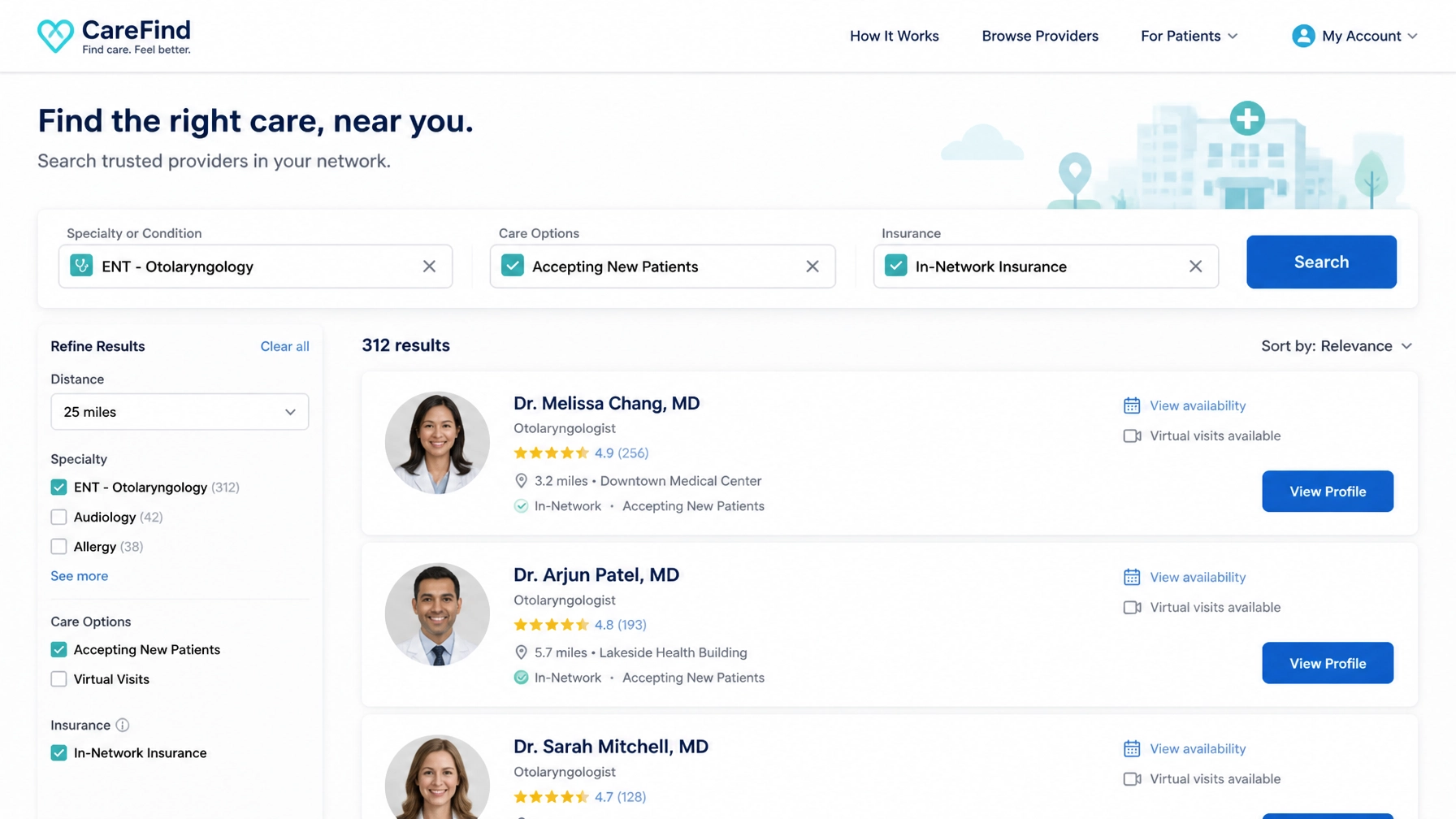
Once you've identified the need for a specialist, the next step is finding a provider who fits your needs. Searching for an "ENT doctor near me" can return hundreds of results, which is why using a dedicated Medical Online Directory is essential.
Filtering by what matters: explained
Finding a doctor shouldn't be a full-time job. Our platform simplifies the process by allowing you to filter results based on the criteria that affect your daily life:
- Insurance compatibility: Ensuring the doctor is in-network prevents surprise bills.
- New patient status: Knowing who is currently accepting new patients saves you from making dozens of dead-end phone calls.
- Specialty focus: Some ENTs focus on pediatrics, while others specialize in ear surgery (otology) or sinus surgery (rhinology).
- Language and location: Finding someone who speaks your language and is located nearby reduces the friction of seeking care.
Takes 60 seconds: finding a verified provider has never been easier.
Reading verified reviews: explained
Patient reviews provide a window into the clinic's culture. When browsing doctors on our platform, look for patterns in the feedback. Is the staff friendly? Does the doctor take time to explain procedures? Is the wait time manageable? With over 12,966 patient reviews across our network, you can feel confident in the reputation of the specialist you choose.
ENT conditions and treatments at a glance
Understanding the common path from diagnosis to relief helps set expectations for your first visit.
| Condition | Common Symptoms | Potential ENT Treatment |
|---|---|---|
| Chronic Sinusitis | Facial pressure, thick mucus, congestion | Nasal steroids, Balloon Sinuplasty, Surgery |
| Otitis Media (Ear Infection) | Ear pain, muffled hearing, fluid drainage | Antibiotics, Ear tubes (Tympanostomy) |
| Sleep Apnea | Loud snoring, daytime sleepiness | CPAP, Oral appliances, Tonsillectomy |
| Tonsillitis | Sore throat, swollen neck glands | Antibiotics, Tonsillectomy (if recurrent) |
| Tinnitus | Ringing or buzzing in ears | Sound therapy, treating underlying ear issues |
| Deviated Septum | Difficulty breathing through nose | Septoplasty (surgical correction) |

Questions to ask before booking your appointment: explained
Preparing for your visit: staying organized: ensures you get the most out of your consultation. When you call a clinic or book through our directory, consider asking these questions:
- Do you treat my specific condition? (e.g., "Do you specialize in adult sleep apnea?")
- What diagnostic tests are performed in-house? Having hearing tests or imaging done in one location saves time.
- Are you board-certified? Board certification ensures the doctor has met the highest standards of training in otolaryngology.
- What is the average wait time for a new patient appointment?
- Do you offer telehealth for follow-up visits? Many ENT consultations require an in-person physical exam, but follow-ups for results can often be done remotely.
Connecting with care: explained
Choosing a specialist is an investment in your quality of life. Whether you are seeking relief from a sinus headache that won't quit or looking for a pediatrician who can refer your child for ear tubes, the process should be transparent and low-friction.
Medical Online Directory is designed to bridge the gap between patients and providers. We believe that everyone deserves access to verified healthcare professionals without the stress of navigating outdated lists or unverified reviews.
Getting started today
Finding the right otolaryngologist near you is the first step toward breathing easier, hearing clearer, and living better.
- Search: Use our filters to find a specialist in your zip code.
- Compare: Review ratings and clinical specialties.
- Connect: Book an appointment with a provider accepting new patients.
Free, no obligation: start your search on the Medical Online Directory home page today and find the expert care you deserve.
Found this article helpful?